

Engineering Maintenance Technician

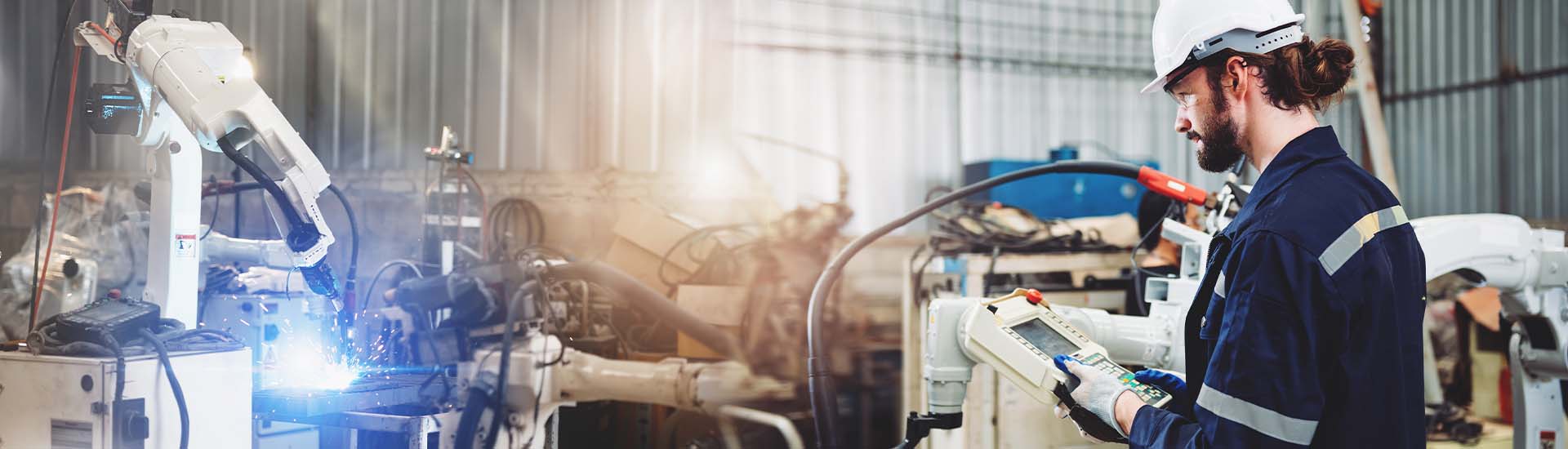
Engineering maintenance technicians work across a range of industries that use plant machinery, apparatus, fixtures and equipment. Apprentices must be trained and assessed against the core requirements and one of the following options: Electrical and control and instrumentation maintenance technician Electrical and mechanical maintenance technician
Viewing course details for 26/27

Apprenticeship Information

Course Type

Subject Area

Type
Full Time

Start Date
/

Tuition Fee
£999

Exam Fee
£999

Duration

Course Leader
{Name of CL}

Study Mode

Location

Curriculum Area

Attendance Days

Attendance

Days and Attendance

Start Date

About this course

About this apprenticeship

Electrical and control and instrumentation maintenance technicians work with electrical, control and instrumentation systems. This may include motors, single-phase and three-phase systems, power supplies, low- and high-voltage electrical distribution systems, programmable logic controllers (PLCs), flow meters, heat exchangers and safety controls.

Electrical and mechanical maintenance technicians work with electrical and mechanical systems. This may include motors, single-phase and three-phase systems, power supplies, low- and high-voltage electrical distribution systems, actuators, fans, pumps, valves, gearboxes and pipework.

Engineering maintenance technicians maintain plant and equipment to optimise operations. They carry out planned and preventative maintenance to reduce the risk of faults occurring, as well as reactive maintenance when issues arise, such as responding to breakdowns. They must prepare for and accept work tasks, complete work safely and to the required standards, close tasks correctly, and maintain accurate work records. They also contribute to continuous improvement activities.

This apprenticeship runs on a college day-release model from The Grimsby Institute, Nuns Corner, Grimsby, DN34 5BQ.

What you will learn

  • Maintenance strategies: planned preventative maintenance (PPM), condition-based maintenance (CBM), scheduled maintenance, total productive maintenance (TPM), breakdown and run to failure maintenance
  • Health and safety regulations – key features and impact on role
  • Safe systems of work
  • Environmental regulations and standards – impact on role: Environmental Management Systems standard, Environmental Protection Act, and Hazardous Waste Regulations
  • Algebraic methods. Trigonometric methods and standard formulae to determine areas and volumes. Statistical methods to display data (mean, mode, median). Elementary calculus techniques: coefficient, gradient of a curve, rate of change
  • Engineering maintenance standards – British (BSI) and International (ISO)
  • Standard operating procedures (SOPs): what they are and why they are important
  • Industry 4.0 – the integration of physical systems with internet connectivity and cloud computing: technologies, systems, and benefits
  • Electricity at Work regulations. IET wiring regulations
  • Electrical isolation and deisolation requirements: lockout tagout and testing for dead
  • Principles of single phase and three-phase equipment, plant, and systems, the operation of motors and generators, and the use of monitoring and protection equipment
  • Electrical engineering principles: circuit terminology, Ohm’s Law, transformer theory, and power calculations
  • Electrical and mechanical. Types of diagrams used to represent circuits; symbols and abbreviations used to represent components in electrical schematics
  • Electrical maintenance tools, measurement, and test equipment application, operation, care and calibration requirements
  • Problem solving and critical reasoning techniques.

What next?

Successful learners can progress to a range of qualifications including HNC/D in Electrical/Electronic, Mechanical or General Engineering.

Link takes you to our Instagram page Link takes you to our LinkedIn page
Apply Now Course Listings
Link takes you to our Instagram page Link takes you to our LinkedIn page
Engineering
Apprenticeships
Apprenticeships